Judgment at Tokyo: World War II on Trial and the Making of Modern Asia
- Author: Gary J. Bass
- Publisher: Vintage
- Published: 2023-10-17
- ISBN-13: 9781101947111
東京大審:二戰審判與現代亞洲的誕生
- Author: 蓋瑞.巴斯
- Publisher: 讀書共和國╱衛城出版
- Published: 2026-07-01
- ISBN-13: 9786267835449
I read the Chinese translation published by Acropolis (衛城出版).
How do you get justice out of a multinational war, with so much violence in it?
By answering violence with more violence and punishing the perpetrators?
Or can we make sure these tragedies never happen again?
First, we have to lay out the charges one by one and discuss them clearly. We need a court and a trial. We need to confirm that the accusations hold up and that someone is answerable behind each crime.
After the war, the Allies hoped trials could establish some international order that would constrain aggressors in the future, so that war would not happen again.
In Europe, there was Nuremberg.
MacArthur was full of resentment toward Japan. He actually wanted to try the war criminals quickly and be done with it. But the White House had already decided to hold a trial.
It was not an easy trial to stage. Judges and prosecutors had to be found among the Allied nations. Many of the judges were not their countries’ first choice, and many countries were already short of judges at home. Nobody wanted to travel to Tokyo, far away and ravaged by war, to try a case with no visible boundaries.
In the end they found 11 judges. These judges were not perfect. They all came from the victorious nations and may have been biased toward the victors. Among them was the strange Soviet judge. The book says he was not a judge in any sense of the word, and Lenin once said that “the dictatorship of the proletariat is not bound by law.” The other judges wore judicial robes; he wore a Red Army uniform. All he had to do was obey the Party and find every defendant guilty.
The Tokyo trial is full of three-headed-dragon meme energy: two dragons that look fierce and serious, paired with one that is there for comic relief.
The trial is often criticized as a political trial by the victors that lacked a certain degree of fairness. Honestly, the procedure was fairly sincere. The accused senior Japanese officers all had capable American or Japanese lawyers defending them. Most of the judges also argued the legal details vigorously, given their limited time and resources. But structurally, political decisions put a ceiling on how well the trial could possibly turn out.
Political interference 1: Don’t touch the Emperor
Allied headquarters had already decided that the Emperor could not be dragged into the trial. Over the course of the war there were 17 cabinets with different ministers, but the Emperor was the same person throughout. And yet he was held responsible for nothing. Both prosecution and defense shielded him. Only the judges felt that, with so much testimony pointing to his responsibility, it was absurd that he couldn’t be prosecuted. The defense lawyers were all cabinet members, so they held some loyalty to the Emperor. The chief prosecutor, Keenan, was a Truman confidant with insufficient legal expertise, and he was mostly there to generate PR effects in the media.
MacArthur also had fairly practical reasons. After accepting Japan’s surrender, he was like a player in the game Rebel Inc.: a foreign power taking over a war-torn region. And that was not just the Japanese home islands. The expanded Japanese empire included Taiwan, Korea, Indonesia, Malaya and more. In Malaya, the Japanese army had surrendered to the British, and the Japanese were actually in a strong position, while the British force was close to being wiped out.
And right from the start of the game, your superiors have handed you a custom judicial reform: hold a trial. Do you dare put the spiritual pillar of an entire people on trial? Will rebellions break out immediately afterward? After a long period of wartime media control, nobody knew what the Japanese public really thought.
MacArthur met the Emperor in secret early on and arranged the non-prosecution.
Political interference 2: Allied interests over justice
The prosecution of Japan could not burn the United States. So the use of atomic bombs on Hiroshima and Nagasaki could not be examined, and neither could bombing in general, because the Americans had firebombed Tokyo and 11 other cities on a massive scale.
By extension, the trial itself could not hold Japan responsible for the bombing of Chongqing.
I used to hold a misconception about this: war is cruel, so does it really matter that much which weapons cause the casualties?
The difference is that those methods were not aimed at military facilities and units but at civilians. The Tokyo bombing used incendiary bombs against wooden houses. The atomic bombs were designed to hit the densest part of a city center.
In the end, the Allies put their own interests above the pursuit of justice.
Japan’s Unit 731 conducted biological warfare and live human experiments in Northeast China, which was extremely inhumane. But because both the US and the Soviet Union wanted its research data, its leaders traded the data for immunity from prosecution.
An imperfect court
Judges, prosecutors and defense lawyers are all human
A court can never be a perfect system.
The judges had hotel rooms in post-war, ruined Tokyo, but no air conditioning in the heat. They had to wear heavy judicial robes to work. They also had worries back home, whether about family, courts or politics in their own countries. They were flesh and blood, and when they heard about brutal atrocities they murmured to themselves to distract their attention.
The Japanese lawyers often commuted two or three hours to work. They had far less time than the prosecutors to prepare their defense. Their pay was low, and someone had to front the money for them.
With so many countries involved, there was also the language problem: people wore headphones and relied on interpreters to understand what others were saying.
You finally have a venue where nations can call Japan to account. Can every nation actually perform well? What impressed me was the KMT. They talked about their deep hatred of Japan, but in reality nobody had counted the civilian casualties. They couldn’t gather sufficient data and evidence for court. The KMT sent only a hack to court, who lavishly praised Generalissimo Chiang and then demanded compensation for so many guns, shells and soldier losses. In practice, it was Western witnesses who could give details, such as seeing children bayoneted and where the bodies were buried.
Flaws in theory
Besides the practical problems, there are theoretical ones.
On what grounds can this court try these people? Does it have jurisdiction?
Which matters and which evidence can be brought up for discussion in court?
Under the command of the senior generals in the dock, the army committed many terrible crimes. Each one, taken alone, is hard to accept. But which law actually bound their conduct? Did they know of those laws at the time they acted? Is judging their actions by after-the-fact standards too harsh? Does giving up on holding them responsible because of strict theoretical standards amount to indulgence?
Can crimes committed by a state be attributed to individuals?
If you disagree with the verdict, can you appeal?
Can trials bring peace?
The point is: after the trial, did wars of aggression end? Did the world get peace? Obviously not.
I think that when the Japanese army’s atrocities were exposed and fought over in court, that was the first time ordinary people learned of these things from the newspapers. That in itself seems to have had the effect of shaping public memory.
In conclusion, the trial doesn’t seem to have worked very well. Its resonance is not nearly as strong as Nuremberg’s was for Europe. The book says Western Europe looked peaceful and united after Nuremberg, while post-war Asia was dangerous and disorderly. Nuremberg is celebrated by lawyers and human rights fighters, while the Tokyo trial is regarded as best forgotten. People are suspicious of the legitimacy of every aspect of it.
The book also notes that the victors never want to bind themselves with the same strict standards, which limited the results of these verdicts.
Post-war Japan as the crossroads of modern Asia
The Tokyo trial is like several books I read earlier for different interests and purposes, all converging on this stretch of the Asian theater in World War II.
- The Bomber Mafia (my review) traces how aerial bombing developed all the way to the firebombing of Tokyo.
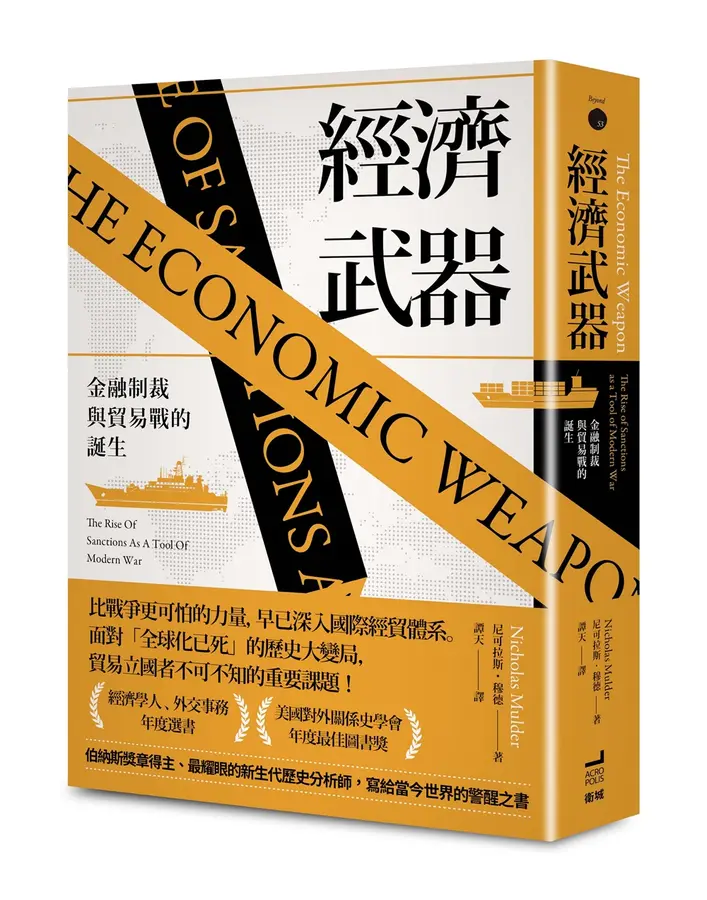
- The Economic Weapon (my review) looks at it from a material angle (setting racism aside) and discusses how the American oil embargo shaped Japan’s expansion strategy.
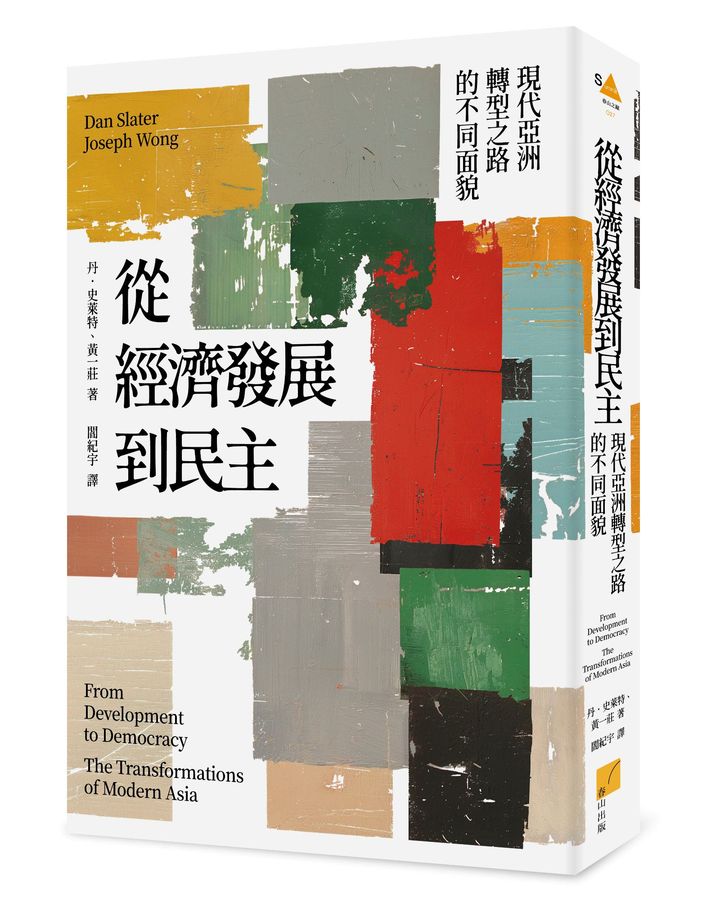
- From Development to Democracy (my review) asks why Japan could transform from militarism to democracy after the war.
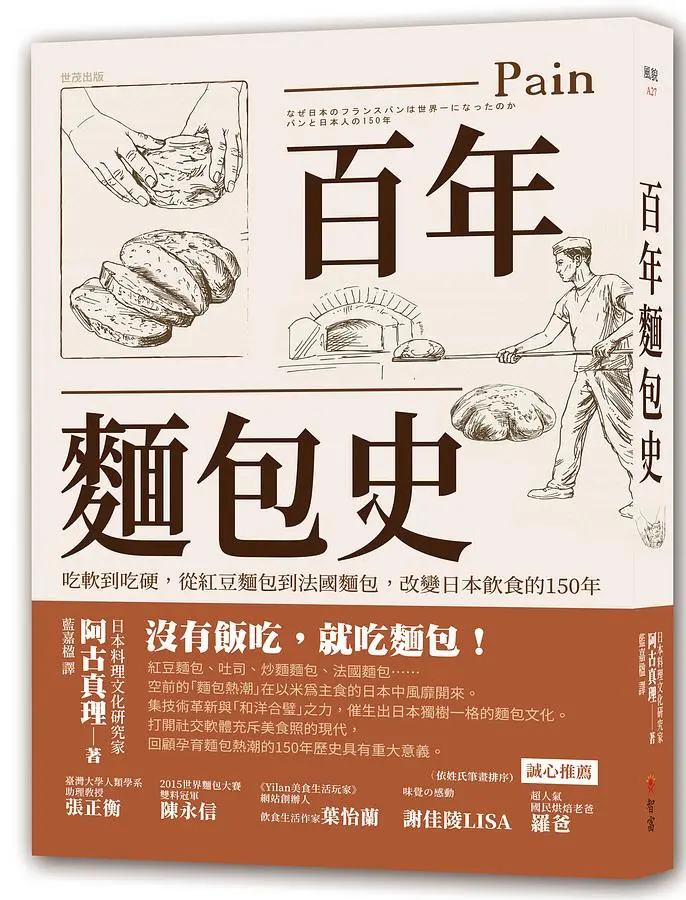
- Even a book on the history of bread, 《百年麵包史》 (A Hundred Years of Bread, not available in English), covers this: many Japanese European-style breads came from German POWs working with Japanese people, Chinese cuisine came from Manchukuo, and the modern self-service bakery, where you pick your own bread with tongs, was learned by a Japanese officer in Mexico after the war.
It felt like several invisible Obsidian notes in my head were suddenly linked together. But my tiny context window could only melt them into a lump of slop.
Is there a silver bullet for peace?
Looking at the whole of WWII history, there seem to be common themes: people made all sorts of efforts to preserve peace, only to meet with Sisyphean futility.
One line of thinking is that if I had a weapon destructive enough, precise enough and non-violent enough, it could end war. These correspond to the atomic bomb, precision bombing and economic weapons. Such arguments sound like very slippery rhetoric: nuclear bombs and bombing are plainly more effective tools for killing, yet they get described as tools for promoting peace. Economic weapons look peaceful on the surface, but historically they can get terrifying enough to starve people. A weapon being morally problematic doesn’t mean it is strategically useless; each just has its blind spots.
The other approach is to negotiate treaties and laws and try to build an order: the League of Nations, the United Nations, international courts, the Geneva Conventions, the Kellogg–Briand Pact and so on. The problem here is that victors are unwilling to bind themselves by those standards.
The dead need a respectful, proper burial
Another common theme is this: like in the film The Odyssey, bodies that haven’t been properly buried crawl out of the sand and haunt you.
As the KMT example above shows, who has the ability to gather evidence and whose testimony is detailed decides whose suffering is remembered, and it can also decide how heavily blame falls. The dead need to be buried and recorded.
Deaths left unexplained become fuel for future conflicts and grudges. The book mentions Warsaw Genuflection. The West German chancellor sincerely apologized for past German atrocities, and although half of Germans thought he had gone too far, he won the respect of the Poles. The practical effect was to break the Soviet propaganda line: “if you don’t join the communists, you’ll be haunted by the Nazi shadow.” That indirectly helped Eastern Europe break away from communist influence.
The US never apologized for the atomic bombs. Japan’s apologies for its wartime conduct have also always been vague. This keeps Japan–Korea relations perpetually tense, and lets China and Russia stir up anti-Japanese sentiment to divert attention from domestic problems.